The Working Class Pays the Price for the War Economy
Military tensions and war are no longer confined to specific regions of the world; they are increasingly spreading throughout the global capitalist system. War is neither the product of the ignorance and criminality of political leaders nor merely the result of decisions taken by warmongering leaders. Nor is war an exceptional event or a deviation from the normal course of capitalism. Rather, it is one of the forms through which the internal contradictions of this system manifest themselves during its period of crisis and historical decline.
Capitalism has nothing to offer humanity but war, destruction, poverty and, in a word, barbarism. War has become an inseparable part of the very logic of this system’s existence. Consequently, wars, military tensions, the consequences and costs of war, and social crises inevitably spread and become increasingly widespread throughout the world.
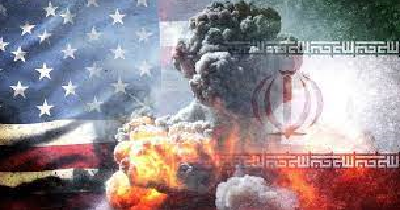
In the wake of the Russia–Ukraine (NATO) war, the war in Gaza and the intensification of international confrontations, states have increasingly moved towards a war economy and rearmament. The recent US–Israeli war against Iran has taken this process into a new phase. The capitalist world is moving ever more rapidly towards a war economy. States are increasing military expenditure, expanding their arms industries and preparing societies for longer and more extensive wars.
Under capitalism, arms production is generally regarded as part of the military economy. In this form of production, a portion of the means of production — comprising both constant and variable capital — is devoted to producing commodities whose use-value, unlike that of consumer goods and productive goods, plays no role in the reproduction of constant and variable capital. Rather, their ultimate function becomes apparent in the destruction of constant and variable capital, particularly in the course of war.
The expansion of arms production, although it has consistently been used as a means of counteracting capitalist crises and maintaining levels of employment and demand, cannot continue indefinitely. Ultimately, the use-value of the arms produced must be realised; in other words, the weapons produced must be put to use and fulfil their destructive function in war.
On the one hand, arms production can generate employment and enable capitalists to realise surplus value. In this respect, like any other sphere of commodity production, it forms part of the process of capital accumulation. On the other hand, however, once produced, arms do not enter the cycle of capital reproduction in the conventional sense. Unlike machinery and other commodities that are used again in the production process, military aircraft, missiles, tanks and other military equipment are ultimately used for destruction and annihilation.
From this perspective, the expansion of arms production, through the consumption and destruction of vast quantities of constant capital and labour power in war, itself becomes a factor in intensifying the crisis. In other words, from a Marxist perspective, arms production is inherently crisis-inducing.
Arms production and war, therefore, cannot be regarded as phenomena independent of capitalist relations. The expansion of arms production and the transformation of the economy into a war economy are among the ways in which the internal contradictions of capitalism manifest themselves and intensify. Capital devoted to the production of instruments of destruction diverts a portion of society’s resources away from meeting human needs and towards reproducing the war machine. A war economy should therefore not be understood merely in terms of increased military expenditure. Rather, it entails the organisation of production, distribution and the allocation of social resources according to the imperatives of competition and war — that is, the transfer of social resources and productive capacities away from the reproduction of life and towards reproducing the war machine.
The rapid growth in military expenditure signals the expansion of the war economy and the increasing diversion of social resources towards military competition and war. In 2025, global military expenditure reached a record $2,887 billion, marking the eleventh consecutive year of growth in military spending. War expenditure in Europe also rose by 14%, with European NATO member states spending a combined total of $559 billion on the military. Spain increased its military expenditure by 50% in a single year, while France, too, moved towards a substantial increase in military spending.[1]
This trend is also evident at EU level. Defence expenditure by EU member states reached €418 billion in 2025, a 20% increase on the previous year. For 2026, the figure is projected to reach €454 billion. In France, the budget of the Ministry of the Armed Forces increased by €6.7 billion compared with the previous year, reaching €68.4 billion in 2026. Meanwhile, the budget for major arms programmes is set to rise by 31% year on year, reaching €13.9 billion.[2]
In the United States, this trend has assumed even greater proportions. Defence expenditure has surpassed the $1 trillion mark. The US state has allocated approximately $1 trillion for national defence in fiscal year 2026, while the House of Representatives has approved authorisation for $1.15 trillion in military spending for 2027. Meanwhile, following the direct US–Iran war, the US Congressional Budget Office (CBO) has separately examined the costs of military operations against Iran and their economic and budgetary consequences. According to the CBO’s estimate, the direct cost of these operations to the US Department of War stood at approximately $38 billion as of 1 August 2026.
But the fundamental issue is not simply the sheer scale of these figures. The central class question is: which social class bears the cost of the war economy? Under a war economy, an ever-larger share of social production, investment and labour power is directed towards reproducing military capabilities rather than sustaining social life. War and military budgets are financed from social resources. In other words, their costs are borne through austerity policies, wage suppression, mass redundancies, rising housing, healthcare, education and transport costs, reduced investment in social infrastructure and, ultimately, a decline in the working class’s standard of living.
From this perspective, a war economy means not merely an increase in military spending, but a shift in production priorities and the allocation of social resources, subordinating them ever more fully to the demands of war and military competition. In other words, resources that could be used to raise living standards and fund education, healthcare, housing and the provision of social needs are instead channelled into reproducing the war machine.
Under such conditions, wages must be kept in check while arms budgets continue to rise; schools must contend with a lack of resources, while the army must not face shortages of ammunition and equipment; and housing and other essential costs may rise, while the resources required to expand military capacity continue to be provided without interruption.
This relationship can be observed in different parts of the world, albeit in different forms and to varying degrees. In Iran, the costs of war and the deepening economic crisis are reflected in declining purchasing power, rising inflation, shortages of medicines and the continued erosion of living standards. In Europe, governments’ rearmament drive requires additional financial resources, thereby intensifying pressure on public budgets and social priorities. In the United States, too, the enormous costs of the military machine and overseas military operations, alongside other costs arising from the crisis, divert a portion of social resources towards war and armaments.
In peripheral capitalist countries, the destructive effects of a war economy can be far more devastating than in the metropolitan capitalist countries, owing to their more vulnerable economic structures and limited resources. Iran is a stark example of this. In August 2026, according to data from the Central Bank of Iran, year-on-year inflation reached 84.4 per cent. This meant that households paid, on average, 84.4 per cent more than in August of the previous year for the same basket of goods and services. At the same time, the rial fell to historic lows on the open market.
Every billion euros, dollars, pounds or rials allocated to the production of missiles, bombs, aircraft, warships, drones, ammunition and other military equipment absorbs a portion of society’s resources. These costs are financed through higher taxes, an expansion of public debt, cuts to social spending and public services, pressure on real wages, or intensified exploitation of labour. In all these cases, the burden of the war economy falls on the working class and the most disadvantaged sections of society.
From this perspective, rising unemployment in European countries cannot be examined in isolation from the broader economic situation or the ongoing transformations of capitalism in these countries. In France, according to data published by the French National Institute of Statistics and Economic Studies (INSEE), the unemployment rate reached 8.3 per cent in the second quarter of 2026. This was the highest level recorded since the COVID-19 pandemic.[3]
The increase in France’s war and military expenditure, alongside mounting pressure on employment, wages and social services, exposes a fundamental issue: in a war economy, an increasing share of society’s resources is devoted to reproducing the military machine, while the pressures on the reproduction of labour power and on workers’ lives intensify. These pressures manifest themselves in wage restraint, job insecurity, rising living costs and the erosion of public services.
In this sense, a war economy is a form of social organisation under capitalism in conditions of intensifying imperialist rivalries and a growing tendency towards generalised war. Under these conditions, an increasing share of society’s resources and productive capacity is placed at the service of the state, capital and the war machine, while human needs are pushed to the margins. From this perspective, examining the war economy means more than simply explaining the increase in war (military) expenditure in a metropolitan capitalist country. It means asking how, under metropolitan capitalism, society’s wealth and productive capacity are allocated to serve the needs of capital, and how this allocation finds expression in a form of capitalist existence in the era of its decline.
The expansion of the war economy, not only in Europe but across the world, together with the increase in the French state’s war (military) spending, has led to a rise in domestic and export orders for France’s defence and aerospace industries. These industries are not experiencing a decline in demand for labour; on the contrary, they are recruiting extensively to meet new orders.[4]
Given the expansion of France’s military industries, the employment agencies responsible for meeting the sector’s labour needs no longer regard previous experience in the defence industry as an essential requirement. Instead, they are seeking to meet the workforce needs of France’s war industries through training, retraining and the transfer of skills acquired in other industries to defence-related jobs.[5] However, obtaining a job in the military-industrial sector requires security clearance, and not all applicants will necessarily be able to obtain it, even if they have an unblemished record and no criminal convictions.
The protests by young people and school students in France can be understood in the context of the social consequences of the war economy and the government’s austerity policies. As more resources are allocated to expanding military capabilities, pressure on education and other public services intensifies. Inadequate educational facilities, the deterioration of school buildings and mounting pressure on education workers have become part of the everyday experience of students and their families. From this perspective, the students’ protests are a reaction to a war economy that has created intolerable conditions for them.
The state’s response to these protests must also be understood within the framework of the war economy. When social protest extends beyond controlled channels and the limits deemed acceptable by the existing order, the state resorts to policing and repression, labelling protesters as ‘rioters’ or ‘troublemakers’. The French state’s adoption of the role of a police state and its violent repression of the protests expose the true face of bourgeois democracy: a democracy that, when necessary, casts off its democratic mask and reveals its repressive character. The bourgeoisie’s massacre of more than 20,000 people during La Semaine sanglante (the Bloody Week), following the defeat of the Paris Commune, stands as a historical example of the use of state violence and brutality to defend the existing order.
From a Marxist perspective, a distinction must be drawn between individual acts of violence and conscious, collective class struggle. Although individual anger and violence may express genuine, deeply rooted anger within society, they do not in themselves lead to class consciousness or generate the collective power of the working class. The French repressive apparatus has sought to exploit isolated acts of individual violence to justify its own violence and brutality, provoking violence and then violently repressing the protests. In doing so, it provides the bourgeois propaganda machine with the material it needs to portray protesters as ‘rioters’. In this way, social protest is reduced from a form of collective class struggle to a series of isolated individual acts, which the state then invokes to justify its repression.
The undeniable truth is that violence is an inherent and fundamental aspect of class struggle. The violence of the exploiting class is integral to the nature and functioning of the ruling class, and it can be resisted and brought to an end only through the resistance and class force of the exploited class, namely, the working class. This is one of the preconditions for the victory of the exploited class.
There is no need to explain the violence of the ruling class: it is the violence of a minority against the majority, whereas the proletariat represents the majority of society. Wherever the proletariat has succeeded in taking political power, it has sought to dismantle the existing relations and instruments of repression. Examples of this can be found in the Paris Commune and the October Revolution.
The revolutionary violence of the proletariat, unlike that of the ruling class, is a form of collective force grounded in class consciousness and arising from the organised struggle of a class seeking to abolish capitalist relations. A proletarian uprising or revolution and, in conditions of civil war, the breaking of bourgeois resistance can be forms of this collective class force. Proletarian revolution cannot be reduced to a series of individual acts. Its strength lies in collective organisation, shared decision-making and the direct participation of the working masses in social struggle. The revolutionary force exercised by the proletariat is therefore directed towards the aims of class struggle and its historical perspective; it has nothing in common with individual or personal violence, whatever its form or justification.
In many cases, individual acts of violence express suppressed anger and serve as a means of releasing it. Such violence can prevent protests by school and university students from bringing families out onto the streets, drawing local residents into the struggle and transforming the streets into public forums. When streets, neighbourhoods and schools become spaces for collective debate, discussion and even heated argument, the conditions for the development of collective consciousness and the sustained, organised continuation of protest improve. This process can not only make protests increasingly radical but also reduce the scope for their repression. Such conditions can lay the groundwork for the formation of protest committees and other collective bodies, while strengthening the links between these protests and workers’ struggles.
Transforming these protests into part of the workers’ struggle is crucial, both for building class solidarity and for forcing the capitalist state to retreat, but above all for advancing the ultimate objectives of class struggle. It is not young people labelled “Generation Z” who will challenge capitalism, but young people from the working class, who must take their place at the forefront of the class struggle. They are the ones who can change the future. From a class perspective, the concept of “Generation Z” is meaningless in itself. Like other sections of society, young people who make up “Generation Z” belong to different social classes, have different class interests and do not necessarily share common interests.
Struggles for higher wages, housing, education, healthcare, shorter working hours, better working conditions and the defence of living standards are real and necessary. Their significance, however, is not limited to immediate economic gains. In the face of capitalism’s attacks on the living and working conditions of the working class, defending living standards and resisting exploitation can be achieved only through class struggle.
Everyday struggle, when grounded in independent organisation and the expansion of class solidarity, can become a terrain on which class consciousness develops and deepens. Through struggle, workers come to recognise that problems which initially appear to be personal or occupational have social and class roots, and that their interests are opposed to those of capital. Strikes, general assemblies and links between the struggles of different sections of the working class provide opportunities to experience and strengthen collective power. Class solidarity, moreover, cannot be reduced to unity among all “citizens”, regardless of their class position. Rather, it requires workers to move beyond occupational, workplace, sectoral and national boundaries and to recognise their common class interests.
However, the ultimate objective cannot be merely to defend existing living standards or to pressure the state into distributing resources more equitably within the framework of capitalism. Even when compelled to make concessions to workers, the state remains the state of capital and safeguards the conditions necessary for the reproduction of existing social relations. Everyday struggles therefore inevitably encounter the limits imposed by capitalist relations. The practical experience of struggle can expose these limits and reveal the need to confront capitalist relations themselves.
From this perspective, the struggle against the consequences of capitalism must be linked to the struggle against capitalism itself. The struggle for wages, housing and social services must form part of the independent and revolutionary organisation of the proletariat and the struggle to abolish wage labour. The emancipation of the working class, and of humanity from exploitation, is possible only through the abolition of capitalist relations and the smashing of the political and social power of the bourgeoisie. The horizon of this struggle is a society in which production is organised not for the accumulation of capital and the pursuit of profit, but to meet human needs.
The Future Belongs to the Class Struggle!
Long Live the War Between the Classes!
M.J.
8 October 2026
Notes:
[1] Stockholm International Peace Research Institute (SIPRI).
[3] Unemployment Rate in France.
[4] Economic Forecast for France.
Download as PDF