The Mecca Defense Pact: A Sign of Escalating Tensions and Imperialist Chaos
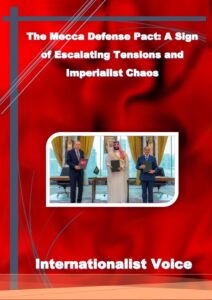
On August 7, 2026, a defense agreement between Turkey, Saudi Arabia, and Pakistan was signed in Mecca, stipulating that an attack on any one of the three countries would be considered an attack on all three. The significance of this agreement should be understood not through its provisions themselves, but through its place in the process of intensifying and reshaping imperialist relations. This agreement is one indication of shifting balances of power and escalating imperialist tensions in West Asia.
Turkey is a member of NATO, the most important and powerful imperialist military alliance in the world, and U.S. nuclear weapons are also stationed on Turkish territory. Article 5 of the NATO Treaty establishes the principle of collective defense on the basis that an armed attack against one member is considered an attack against all members. NATO members reaffirmed this principle at the Ankara summit in July 2026 as well. Therefore, the issue is not that Turkey lacks defense guarantees; rather, the question is why the Turkish government, alongside its membership in NATO, is seeking to establish or strengthen other military arrangements in West Asia.
Pakistan is also a nuclear power. China, driven by its own imperialist and geopolitical interests, plays an important role in strengthening Pakistan’s military and economic capabilities. Saudi Arabia, meanwhile, has been heavily armed by the imperialist powers, above all the United States, for decades, and continues to maintain military agreements with various imperialist powers. The question, therefore, is to what extent the new pact can enhance the security of its member states, particularly Saudi Arabia.
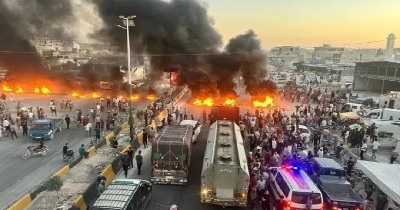
The new pact has not prevented the Houthis from continuing their military operations against Saudi interests. The Houthis continue to launch missile attacks on the airports in Abha and Najran and, by restricting maritime routes, disrupt the movement of Saudi vessels in the Red Sea, forcing them to alter their course and sail around Africa. The Houthis have also carried out extensive attacks on the port of Al-Mokha, one of Yemen’s strategic ports in the Red Sea region, which is under the control of Saudi-backed forces. The port is of considerable strategic importance.
The new pact has also failed to prevent Pakistani nationals from being killed. In one of the Houthis’ recent attacks on Saudi vessels, several crew members were killed and wounded following the signing of the Mecca defense pact; two of those killed were Pakistani nationals.
These contradictions cannot be understood solely from a defensive perspective. This agreement is part of a broader process in which regional governments are seeking to pursue their imperialist ambitions under conditions in which capitalism is moving toward generalized warfare and, consequently, greater chaos.
To understand this process, imperialism should not be reduced merely to the foreign policies of the United States, Britain, China, or a handful of major powers. Imperialism is not a specific foreign policy; rather, it is a stage in the development of capitalism in which all capitalist states, according to their power and position, participate in imperialist relations.
Under capitalism, competition over markets, resources, energy, trade routes, spheres of influence, and the conditions for capital accumulation becomes political and, ultimately, military competition among states. Each state is compelled to compete with other states in order to preserve or expand its position. This competition, together with shifting balances of power and deepening capitalist crises, can lead to the formation of new alliances, expanded military and arms cooperation, and the redefinition of existing security arrangements.
For this reason, what happened in Mecca cannot be viewed simply as an agreement among three states. The agreement must be understood within the broader context of intensifying imperialist rivalries and shifting balances of power in the region and around the world. The formation of new alliances and the weakening or redefinition of existing arrangements are part of this same process—a process that, rather than reducing contradictions, intensifies them and creates conditions for the expansion of capitalist chaos and further military tensions.
In its period of historical decline, capitalism is not moving toward a reduction in competition among states; on the contrary, capitalist crises and the contradictions inherent in capital accumulation intensify competition among states. Each capitalist state is compelled to compete with other states in order to protect the position of its capital in the global market, secure the resources and markets it needs, control trade and energy routes, and maintain its economic and military capabilities.
For this reason, the expansion of a state’s imperialist ambitions inevitably brings it into conflict with the interests of other states. These contradictions lead to heightened political and military tensions, proxy wars, and, ultimately, direct confrontations. Thus, under the current conditions of global capitalism, competition among capitalist states becomes one of the main factors driving the expansion of chaos around the world.
Competition among capitalist states, regardless of their flags or ideologies, places its costs on the working class and expands capitalist chaos. The task of communists is not to defend any imperialist camp, but to expose the common logic underlying all of them and defend class independence and proletarian internationalism.
The main danger in a period of escalating imperialist tensions is not simply the outbreak of war. One of the most serious dangers is the mobilization of the proletariat behind the flag of its “own” bourgeoisie. During periods of military tension, the bourgeoisie addresses workers not as workers, but as “Arabs,” “Turks,” “Pakistanis,” “Israelis,” “Americans,” “Muslims,” “Jews,” “Christians,” or “patriots,” emphasizing their national, ethnic, religious, and patriotic identities. It calls on workers to see themselves not as members of a global class, but as part of their own nation, ethnicity, or religion, and to stand against the “foreign enemy.” It calls on them to sacrifice for “national security,” “defending the homeland,” “defending the faith,” or “confronting the foreign enemy.”
In this way, the very class subjected to exploitation is transformed into a defender of the state, capital, and the social relations upon which its exploitation rests.
The fundamental divide is not between nations, but between classes. A worker who is exploited in a factory, mine, port, or service sector shares common class interests with a worker across the border who is in similar conditions—not with a capitalist who merely happens to have been born in the same country. This truth becomes even more important in times of war and crisis.
Following the Mecca defense pact, the Islamic bourgeoisie declared that the trilateral agreement among Turkey, Pakistan, and Saudi Arabia was not directed against Iran. But the issue is the material position of this agreement within the regional and global balance of power. The establishment of a new military arrangement, even if it is not officially directed against any particular state, can come into conflict with the imperialist ambitions of the Islamic Republic of Iran, Israel, and others. The same applies to India’s imperialist ambitions. The clash of these interests creates the conditions for escalating imperialist tensions, and the continued intensification of these tensions is part of the chaos and instability inherent in imperialist relations.
This is precisely where the necessity of proletarian internationalism becomes clear. The Saudi worker has no common class interests with the Saudi government, just as the Turkish worker has no common class interests with the Turkish government, the Pakistani worker with the Pakistani government, or the Indian worker with the Indian government. The same is true of workers in the United States, Europe, China, Russia, and elsewhere. Nowhere can the proletariat find its historic interests in an alliance with its “own” bourgeoisie. The historic interests of the proletariat lie in solidarity with workers in other countries and in the common struggle against the capitalist system and all capitalist states.
The task of communists in this situation is clear: to unconditionally defend proletarian internationalism and expose all imperialist states, regardless of their flags, religions, ideologies, or claims. The task of communists is to provide a material analysis of the conditions that give rise to imperialist rivalries and to demonstrate the dangers that these rivalries and capitalist chaos pose to humanity, and especially to the working class.
As long as capitalist relations persist, crises and competition among states will not disappear. As capitalist crises intensify, these rivalries can lead to military tensions and a tendency toward war—and, under current conditions, toward generalized warfare. Military alliances and agreements among imperialist states do not eliminate these contradictions; rather, they are part of the competition to alter the balance of power and can contribute to escalating tensions and expanding chaos.
For this reason, confronting war and capitalist chaos requires putting an end to the social relations that reproduce imperialist competition and war. The struggle against war, if separated from the struggle against the capitalist system that produces it, can ultimately become a form of support for one side in an imperialist war.
By intensifying its crises and contradictions, capitalism is pushing humanity toward greater imperialist rivalries, war, and expanding chaos. What we are witnessing today in West Asia must also be understood within the framework of this global process: the expansion of imperialist rivalries, the realignment of alliances, and the transformation of every regional crisis into part of an ongoing shift in the balance of power on a scale that extends beyond the region.
Against this process, only the expansion of independent proletarian struggle and its international coordination can challenge the logic of imperialist competition. For the proletariat, the issue is not choosing between this or that state, this or that pact, or this or that camp; the issue is putting an end to the social system that turns capitalist states into instruments of imperialist competition and workers into soldiers in these rivalries. The abolition of capitalist relations and the establishment of a classless society free from exploitation is the only path that can fundamentally break the cycle of capitalist crisis, war, and chaos.
Joseph
August 11, 2026
Download as PDF