Against the War Economy, Austerity, and Repression: The Working Class Must Lead Its Own Struggle
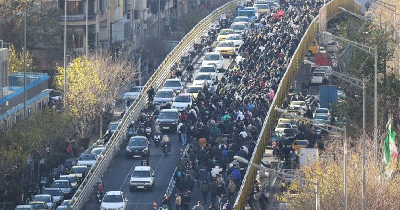
The protests that began in France with students opposing austerity measures in education have gradually taken on a broader social character and spread to other countries, including Belgium, Italy, Albania, Spain, and Portugal. These protests cannot be understood as isolated phenomena, detached from capitalist social relations and the class antagonisms that shape society. The intensifying economic pressures on the exploited masses, combined with the expansion of militarism and rising military expenditures by states, have created the material conditions for this discontent to emerge. However, the geographical spread of these protests does not, in itself, mean that they have become an independent and effective force in the class struggle. The central question is how to connect these protests with the independent struggle of the working class and expand workers’ self-organization beyond national borders.
The war economy and austerity are two sides of the same class policy. By increasing military spending and expanding arms production, capitalist states divert social resources toward military needs and imperialist rivalries. At the same time, they shift the costs of these policies onto the working class through cuts to public services, downward pressure on wages, rising living costs, job insecurity, and intensified exploitation. Education, health care, housing, and other social needs are increasingly subordinated to the demands of capital accumulation and war preparations. From this perspective, austerity is not simply the result of misguided government decisions or inappropriate budgetary choices; it is part of capital’s drive to shift the costs of crises, competition, and militarism onto the working class. Changes in government or shifts in the parties in power do not eliminate this fundamental contradiction as long as capitalist social relations and the logic of capital accumulation and imperialist competition remain intact.
Democratic states, too, resort to repression to preserve the capitalist order, revealing their coercive, police-state character. The police, the judicial system, and other state institutions are mobilized to contain protests and restore the existing order. At the same time, bourgeois media outlets focus on looting, property destruction, and isolated acts of violence, seeking to reduce the protests to “looting” and “rioting” and divert attention from the underlying causes of popular discontent. The point is not to deny that such acts occur, but to ask why a handful of instances of violence or destruction are presented as representative of the protests as a whole, while poverty, austerity, and the pressures generated by the capitalist system—the very conditions that fuel these protests—are ignored.
Nevertheless, state repression and bourgeois media propaganda are not the only obstacles to the struggle. If protests remain confined to the streets and fail to extend into workplaces, they will gradually lose momentum and become easier to contain. Until broad sections of the working class enter the struggle independently and in an organized manner, social discontent cannot become a decisive force in the struggle against capitalism. Workers’ participation in demonstrations is important, but it is not enough. Workers must act as a class, drawing on their collective strength and independent organization. Extending the struggle into workplaces and linking it to protests in neighborhoods, educational institutions, and other spheres of social life are essential to strengthening and sustaining the movement.
In this process, the containment of workers’ struggles by trade unions is one of the major obstacles to the expansion of class struggle. By limiting workers’ struggles to negotiations with the state and employers, limited strikes, and symbolic actions, trade unions keep workers’ discontent within manageable bounds. If strikes and other forms of protest are not under the direct control of workers’ mass assemblies and do not help expand grassroots initiative, they will exhaust the movement’s strength rather than build it. The issue is not simply the conduct of one union or another; it is whether workers take control of their own struggle and refuse to let it be confined within the limits the capitalist system can manage
Another danger is the absorption of protests into a broad, cross-class movement based on the principle of “all together.” Such a movement brings together different social groups in opposition to the government or a particular policy. Sections of the middle class, bourgeois political groups, and even factions of the ruling class may oppose a particular policy without seeking to end capitalist exploitation. If the working class abandons its political and organizational independence and becomes absorbed into cross-class movements, it will not only fail to achieve its own independent objectives but also undermine its own fighting capacity.
In the face of these obstacles, independent mass assemblies, struggle committees accountable to those assemblies, and collective decision-making from below are the principal means of independent working-class organization. These bodies must enable workers to participate directly, discuss the goals and methods of struggle freely, elect and recall their representatives, and coordinate their actions across different sections of the movement.
The expansion of strikes and the linking up of separate struggles must be driven not by subordination to trade unions or organizations of the left of capital, but by workers’ own initiative and collective decision-making. This process of self-organization must not be confined within national borders, since imperialist rivalries, the war economy, and the pressures of capital on workers are global phenomena. Confronting them requires independent international working-class solidarity.
The horizons of these struggles cannot be limited to defending the welfare state or electing a government with a different approach to managing capitalism. The fundamental issue is the struggle against a system that subordinates human needs to capitalist profit, imperialist rivalries, and the war economy. The struggle against austerity can offer a genuinely emancipatory perspective only when it is linked to an independent struggle against exploitation and the capitalist system itself.
In this struggle, the working class must not become a force serving the programs and objectives of other political parties or forces. Instead, by relying on its collective strength and independent organization, it must become the leading force in the struggle for emancipation from capitalism. Liberation from exploitation, war, and the war economy is possible only through workers’ independent self-organization from below, the expansion of class solidarity, and resistance to every attempt to contain or divert the struggle within the framework of the existing order.
The Future Belongs to Class Struggle!
Joseph
8 October 2026
Download as PDF