The Bloody Quagmire of the Middle East and the Escalating War: Spreading the Chaos of Global Capitalism
The intensification of the war and the bloody quagmire in the Middle East is spreading chaos across the entire global capitalist system. The United States has long relied on war to impose and consolidate its hegemony, but this time, not only will its dominance not be guaranteed, the chaos, disorder, and structural instability inherent in capitalism will deepen and expand globally, far beyond the Middle East.
In this new context, each power acts like a gangster, pursuing its own imperialist interests. Under such circumstances, communists cannot be content with abstract statements; they must analyse events concretely and objectively from an internationalist perspective, and, more importantly, outline the path forward.
The United States, in none of the wars of recent decades, if not outright defeated, has achieved a decisive victory. The new war in the Middle East can also be understood within this context, with the key difference that we are no longer facing a conventional war, but rather a form of asymmetric warfare. In this type of conflict, a smaller and weaker power confronts larger, stronger enemies through unconventional means.
Nevertheless, the nature of the war remains unchanged: it is an imperialist war, directly opposed to the interests of the global working class. Moreover, this war has temporarily sidelined class struggle in the Middle East—particularly in Iran—and in this sense, it also acts against the working class. Therefore, the asymmetric character of the conflict does not alter its class-based and imperialist nature.
The Middle East war has reached a critical point. The United States could declare victory, claim that it has destroyed the Iranian military, and even achieved regime change; as a result, it would have fulfilled its objectives and would no longer be responsible for keeping the Strait of Hormuz open.
However, such an action would severely undermine America’s position, prestige, and credibility, and would deeply alarm its allies in the Gulf, Asia, and Europe. Under these circumstances, oil prices would remain high, and global financial markets would face instability, and potentially even collapse.
On the other hand, the Islamic bourgeoisie, wounded and enraged, has considerable capacity to escalate chaos and put further pressure on the global economy. Consequently, the continuation of the war will lead to a spread of disorder on a global scale, with all actors in this imperialist conflict moving along the same path. This war is not merely the product of the will of warmongering leaders, but the outcome of the specific structural conditions of the capitalist system.
Karoline Leavitt, the White House press secretary, warned the Iranian leaders not to miscalculate. The American bourgeoisie is more criminal, more brutal, and more gangster-like than they are; it does not bluff and is prepared to unleash hell. Within this framework, concepts such as international law, democracy, and human rights effectively belong to the past, giving way to the law of the jungle. She stated:
“President Trump does not bluff and he is prepared to unleash hell, Iran should not miscalculate again.”[1]
On the other hand, for the Islamic bourgeoisie, mere survival constitutes a victory; it is not measured by the blows they endure or even the loss of societal infrastructure. However, their horizon is not limited to survival alone; they hope that by controlling the Strait of Hormuz and relying on proxy forces in Iraq, Lebanon, Yemen, and other regions, they can advance their objectives and even achieve strategic gains, such as pushing the United States out of parts of the Middle East.
In light of the analysis of both sides in this imperialist war, it can be expected that chaos and instability in the region will intensify further. Although the United States has not fully and explicitly stated its strategic objectives, it appears to be considering three different tactics to defeat and compel the Islamic bourgeoisie to submit. Which of these tactics it ultimately employs will depend on a range of factors.
One of these options is the occupation of key Iranian islands, particularly the strategic Kharg Island, with the aim of halting oil exports and thereby depriving the Islamic bourgeoisie of financial resources. Another option is the removal of enriched uranium from Iran. Finally, the most likely scenario is the destruction of critical societal infrastructure to increase pressure and force the regime to surrender. Each of these options will be examined separately below.
Before continuing the discussion, it is important to emphasise that the air force and air defence constitute the Achilles’ heel of the Islamic bourgeoisie. The United States and Israel, relying on their advanced technology, exploit this weakness and deliver the most significant strikes through this channel. By contrast, the air force is primarily oriented towards conventional warfare, whereas, as noted earlier, the Islamic bourgeoisie pursues asymmetric warfare and possesses greater experience and capability in this domain. In other words, any ground operations could provide them with greater manoeuvring space—not that they would be free from casualties, but rather that they would have greater operational capacity and initiative under such conditions.
From this perspective, even if, in a ground operation, for example, the Islamic bourgeoisie were to lose 50,000 of its forces but eliminate 500 enemy troops, it would still consider this a form of victory. With these considerations in mind, we will now examine the scenario of a ground operation, particularly on the strategic Kharg Island.
The capture of Kharg Island would require a series of complex and high-risk amphibious operations. At the same time, the Iranian authorities aim to draw American forces into a prolonged and attritional conflict. From this standpoint, the initial capture of the island may not be especially difficult, but holding it would be far more hazardous for American forces. The objective is not merely a momentary occupation; rather, maintaining and controlling the island for at least several weeks, or even months, is crucial—an endeavour that, in the context of asymmetric warfare, would present serious challenges.
Kharg Island is located in the south-west of Iran and, with an area of approximately 20 square kilometres and a population of around eight thousand, holds immense economic significance for the Islamic bourgeoisie. The island serves as Iran’s main oil export terminal, with around 90 per cent of the country’s oil exported through it. Its importance is due to the suitable depth of the surrounding waters, which allows very large tankers to dock and load oil. Oil extracted from various regions is transported to the island via pipelines, including undersea lines, and stored there for export. The storage capacity of Kharg is estimated at over 20 million barrels.
During the Iran–Iraq War, Kharg Island was one of Iraq’s primary targets, with the country striking the island more than 2,800 times. A significant portion of the so-called “tanker war” also took place in and around the waters of Kharg Island, highlighting the strategic importance of the area.
Within this context, Michael Rubin, former senior Pentagon adviser on Iran and Iraq, has been in contact with officials from the Trump administration regarding the significance of Kharg Island and the scenario of its capture, and he believes that:
“If Trump intends to intensify pressure on Iran outside of missile strikes and bombings, seizing Kharg Island would deprive the regime of a key funding source for controlling the population.”[2]
On 14 March 2026, the United States attacked military targets on Kharg Island but did not strike the island’s oil infrastructure. As noted earlier, the scenario of capturing Kharg Island is militarily conceivable; American forces could potentially seize it through heliborne operations, airborne assaults, or even amphibious (land–sea) attacks. However, such an operation would not be without risk and could entail significant casualties and hazards for US forces.
If Kharg were captured, the United States might declare it a victory and claim that it has gained control over Iran’s main oil export source. Undoubtedly, seizing the island would deal a severe blow to the economic structure of the Islamic Republic; yet holding and occupying it, even for a few weeks or months, would not be without substantial costs and casualties for the United States.
In another scenario, the United States might, instead of targeting Kharg, attempt to seize smaller islands such as Larak, which holds strategic importance for controlling the Strait of Hormuz, or islands like Abu Musa, Greater Tunb, and Lesser Tunb. However, capturing Qeshm Island would be far more difficult, as it is equipped with advanced defensive infrastructure, including underground missile and drone facilities.
Following the bombardment of military targets on Kharg Island, reports emerged that a group of people had gathered at Bandar Ganaveh intending to travel to the island to act as a sort of “human shield.” In other words, the authorities are attempting to exploit the presence of civilians in the midst of a military conflict, effectively turning them into “cannon fodder” in an imperialist war.
Meanwhile, some Republicans, including Lindsey Graham and Peter Anderson Sessions, have recommended to Trump the idea of seizing Kharg Island. Accordingly, these positions can be seen as reflecting certain tendencies within the Republican Party, rather than merely indicating Trump’s individual or adventurous decision-making.
In contrast to these views, Harrison Mann, a former US Army Major who now works with the organisation “Victory Without War,” has described the capture of the island as a “suicide mission” and warned of its potential consequences:
“Seizing Iran’s ‘crown jewel’ would be a suicide mission. An operation to hold Tehran’s oil hostage by taking over Kharg Island could end up delivering the regime hostages of its own.”[3]
The idea of removing enriched uranium from Iran by constructing an airstrip near the Isfahan facilities and deploying personnel and equipment to it is highly difficult and complex. First, it is not clear whether all the enriched uranium is stored in a single location or dispersed across multiple sites. Second, given that the facilities are underground, carrying out such an operation would require several days of intensive work using heavy industrial equipment, all of which would need to be transported by aircraft to a temporary airfield or runway.
Such an operation is not impossible for the United States, but given the current position of the Islamic bourgeoisie, it would be extremely risky. The level of risk involved is so high that Michel Yakovleff, a French general, in response to the idea of removing Iran’s uranium by constructing a runway near the Isfahan facilities and deploying forces, stated:
“American officials should stop snorting cocaine between meetings.”[4]
As noted earlier, the most likely course of action by the United States and Israel is the destruction of Iran’s infrastructure in order to weaken the Islamic Republic. The threat to attack infrastructure, or even to use force against another country, constitutes a violation of international law under Article 2(4) of the Charter of the den of thieves (United Nations). According to the Charter of the den of thieves (United Nations), the use of force is permitted only in two cases:
- Self-defence under Article 51;
- With the authorisation of the United Nations Security Council.
However, for the major gangsters, these rules have often been meaningless. For example, the United States was unable to obtain authorisation from the Security Council for the Iraq War and was accused by legal scholars of violating international law. Today, it is not the United Nations Charter but rather the “law of the jungle” that determines international relations.
In such circumstances, Trump, recalling his previous ultimatum, has stated that Iran has 48 hours to “reach an agreement” or “open the Strait of Hormuz”; otherwise, “hell will be unleashed upon them”. He stated in this regard:
“Remember when I gave Iran ten days to MAKE A DEAL or OPEN UP THE HORMUZ STRAIT. Time is running out – 48 hours before all Hell will reign down on them.”[5]
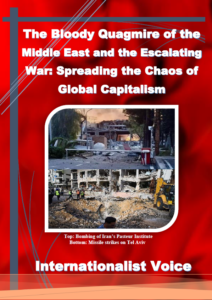
The reality is that for some time the United States and Israel have placed the destruction of Iran’s infrastructure on their agenda, including through the use of bunker-buster bombs. These actions include the bombing of research and medical centres such as the Pasteur Institute[6]; hospitals and universities; public infrastructure such as airports, bridges[7], and historic buildings and museums; and, most importantly, large-scale attacks on factories and vital industries such as oil, petrochemicals, and steel.
In particular, the bombing of two of Iran’s largest steel producers—Mobarakeh Steel in Isfahan and Khuzestan Steel in Ahvaz—as well as the Mahshahr petrochemical complex, can be regarded as a major crime against the working class. The full scale of this disaster is not yet clear; it remains uncertain whether only thousands of workers will be affected, or whether tens of thousands of workers and their families will lose their livelihoods.
To assess the consequences of such attacks, the entire production chain and its related industries must be considered. Disruption in steel production, in turn, causes serious problems for the machinery and construction sectors, potentially leading to widespread unemployment across various industries. Furthermore, damage to the petrochemical chain, refineries, fertiliser production, polymer and plastics industries, and other related sectors would have significant economic and social repercussions, particularly for the working class.
Ultimately, the destruction of these industries would make post-war reconstruction considerably more difficult, demonstrating that the effects of such attacks extend beyond direct damage and could disrupt Iran’s economic and social infrastructure for years. It should also be noted that the Iranian authorities are attempting to target infrastructure in Israel and the Gulf states. In this respect, they are no less criminal than the American and Israeli gangsters; however, due to limitations in technology and resources, their operational capacity is significantly lower compared with the major gangsters in pursuing their imperialist objectives.
In this context, Trump, like a gangster, using coarse and vulgar language, threatened the Iranian rulers over the opening of the Strait of Hormuz. Trump typically employs a harsh, nationalist style, often with Christian religious references. Interestingly, in his recent post, he used the word “Allah” and said:
“Tuesday will be Power Plant Day, and Bridge Day, all wrapped up in one, in Iran. There will be nothing like it!!! Open the Fuckin’ Strait, you crazy bastards, or you’ll be living in Hell – JUST WATCH! Praise be to Allah.”[8]
As noted above, Trump had warned the ruling criminals in Iran, in coarse language, that if no agreement was reached and the Strait of Hormuz remained closed by the deadline, Iran’s power plants and bridges would be targeted. This date was apparently presented as a final deadline. However, after several extensions, Trump postponed it once again, setting it for 8 p.m. Eastern U.S. time on 7 April 2026.
The response from the criminal Islamic bourgeoisie has been one of reciprocal threats. According to this stance, should any of the proposed scenarios be carried out — including attempts to seize Iranian islands, remove enriched uranium, or inflict widespread destruction on Iran’s infrastructure — the entire region would descend into hell, potentially even leading to the closure of the Bab al-Mandab Strait. In this context, Major General Abdollahi, commander of the Khatam al-Anbiya Headquarters, issued a threatening statement:
“From the beginning of the imposed war, whatever we have said, we have acted upon. The simple meaning of this message is that the gates of hell will be opened upon you.”[9]
In other words, our analysis indicates that this war is moving towards further escalation, greater brutality, and increasing chaos. This trend will reverberate across the global capitalist system, as the material foundations of the conflict and its inherent barbarity remain intact, rooted in the very structure of capitalism itself.
Anti-American perspectives often compare the Middle Eastern war to the Vietnam War. However, this comparison is not limited to anti-American viewpoints; even Western journalism has engaged in it. For example, The Guardian, in several articles, has sought to compare the current Middle Eastern conflict with the Vietnam War, arguing that, based on the Vietnam experience, the ongoing developments suggest a shift in the balance of power in favour of Iran, since the United States is mired in a quagmire and its objectives are out of reach. America’s naïve expectation of a swift victory in the Strait of Hormuz has also failed, pushing the country towards the acceptance of new realities.[10]
It is a fact that, contrary to the extensive propaganda of the United States, Israel, their media apparatus, and their allies, chaos and brutality are spreading, with consequences visible worldwide. Nevertheless, comparing the Middle East war to the Vietnam War is not an accurate analogy. The Vietnam War must be understood within the framework of the Cold War and the competition between the Eastern and Western blocs. Without the Eastern Bloc’s military, financial, technical, training, and logistical support, Vietnam would have faced serious difficulties. What ultimately helped bring the Vietnam War to an end was the temporary alignment or convergence of China with the Western Bloc.
Under the current circumstances, there is no bloc that supports Iran. China and Russia each prioritise their own imperialist interests. Although they are unwilling to see Iran’s Islamic bourgeoisie collapse and provide limited support, whether overt or covert, these contributions are not comparable to the assistance Vietnam received from the Eastern Bloc. For example, on 10 March 2026, Bahrain submitted a draft resolution to the UN Security Council condemning Iran for its attacks on Arab countries in the region. The Security Council adopted the resolution with 13 votes in favour, while Russia and China abstained, but did not veto it. Tasnim News Agency, close to the IRGC, explained this development as follows:
“A non-binding and almost ineffectual resolution, which, naturally, major countries such as China and Russia approach politically and with a diplomatic perspective, resulting in abstentions. Such a vote, similar to those previously observed from Russia, China, and Iran, does not signify any change in Iran’s special relations with China or with Russia. Fundamentally, these resolutions have no impact on military or operational dynamics, and friendly countries act based on diplomatic considerations… The world operates on realism, and China and Russia, for multiple reasons, have interests in the Gulf countries and existing agreements that they cannot ignore.”[11]
One view regarding the current Middle East war is that closing the Strait of Hormuz could lead to the decline of American imperialism, with proponents citing Egypt’s nationalisation of the Suez Canal as evidence. However, the material conditions and the role of imperialist powers at that time differ significantly from the present situation.
In 1956, following Egypt’s nationalisation of the Suez Canal, Britain and France, together with Israel, went to war against Egypt and achieved almost all of their military objectives. Yet it was the Cold War era, and the United States was concerned about the expansion of Soviet influence in Arab countries; as a result, Washington forced them to withdraw. For Britain, this event marked the beginning of the end of its dominance in the Middle East.
Today, although China is advancing towards global power, it does not have the capacity to play a role comparable to that of the United States in 1956. China still lacks the political, economic, and military capabilities that the US possessed at that time, and its imperialist interests do not prioritise assuming such a role.[12]
The question arises as to whether the current war in the Middle East could trigger an oil crisis similar to that of the 1970s, with far-reaching economic consequences. Addressing this requires a historical perspective.
In October 1973, Arab oil-producing countries, in response to the support of Western nations led by the United States for Israel during the Yom Kippur War, halted oil exports to those countries and reduced their production. As a result, oil prices nearly quadrupled within a few months, rising from around $3 per barrel to approximately $12 per barrel. This led to fuel rationing in oil-consuming metropoles and sparked a global economic and financial crisis, the effects of which lasted for years. Both the United States and the United Kingdom experienced an economic recession that persisted from 1973 to 1975.
Even if the Strait of Hormuz were to reopen tomorrow, the world would still face heavy energy costs, because in the 1970s the issue was largely political, with the affected countries under sanctions, whereas today significant damage has been inflicted on energy infrastructure across the Middle East.[13]
However, the oil market today differs in several important ways from that of the 1970s:
- Overall oil consumption has declined significantly.
- In the 1970s, the oil crisis mainly affected the capitalist metropoles, whereas today, due to alternative energy sources and reduced dependence on oil, its impact on the metropoles is smaller.
- By contrast, today’s oil crisis primarily affects peripheral capitalism, especially in East Asia, where countries have fewer resources to manage the crisis.
A member of the National Security Committee of the Islamic bourgeois parliament announced that the proposal for Iran to withdraw from the Treaty on the Non-Proliferation of Nuclear Weapons (NPT) will be finalised at the earliest opportunity and is currently on the path to approval. According to him, the Islamic bourgeoisie believes that Iran’s continued membership in the treaty has provided no real benefits and has failed to protect its nuclear facilities from external threats or attacks. For this reason, they consider Iran’s ongoing participation in the NPT “meaningless.” Withdrawal from the treaty could lead to increased tensions with Western countries.
Iran’s geographic position, particularly its control over the narrow Strait of Hormuz, has played a significant role in the course of the war. The Islamic bourgeoisie, recognising that it cannot be certain of receiving compensation from the United States or Arab countries for attacks on Iran and the destruction of its infrastructure, decided to approve a plan in the National Security Committee of the Islamic bourgeois parliament to impose tolls on passage through the Strait of Hormuz. The primary objective of this measure is to secure a financial source for post-war reconstruction.[14] The key elements of this plan are as follows:
- Security arrangements for the Strait
- Naval safety
- Environmental considerations
- Financial arrangements and rial-denominated toll systems
- Prohibition of passage for Americans and the Israeli regime
- Exercise of Iranian sovereignty and the authority of the armed forces
- Cooperation of the Sultanate of Oman in the legal regime framework
- Prohibition of countries participating in unilateral sanctions against Iran
Control of the Strait of Hormuz is exercised through three main domains: air, surface, and underwater.
- Air: via missiles and drones
- Surface: via high-speed vessels and fast boats
- Underwater: via mines, divers, and submarines
In particular, low-cost drones can be launched from various points across the country and cover a large portion of the strait. According to the approved plan, the passage of United States and Israeli vessels through this waterway will be prohibited. More importantly, it is stipulated that countries participating in sanctions against Iran — namely other Western countries and their allies — may also be barred from using this route. If implemented, this provision could escalate tensions not only in the region but also with Europe.
At present, Iran has established “approved” shipping routes through the Strait of Hormuz. Vessels may only transit these routes within Iranian territorial waters after obtaining prior authorisation. Shipowners must submit detailed information on ownership and cargo in advance to register for a permit and are likely required to pay tolls.[15] In certain cases, Iran has collected $2 million in fees for safe passage through the strait.
Iran is in the process of formalising this system, and the Islamic bourgeois parliament has also voted in its favour, reflecting Tehran’s efforts to control the Strait of Hormuz and secure financial resources for post-war reconstruction.
In pursuit of their imperialist objectives, the United States and Israel did not inform or consult European countries before launching their attacks; in other words, the imperialist interests of European states were not considered in operational decision-making. For this reason, European countries provide only “defensive” support for the US–Israeli war and are reluctant to participate directly in the attacks.[16]
It was in this context that Trump labelled NATO allies “cowards,” declaring, “Without the United States, NATO is a paper tiger!” He also suggested that countries facing aircraft fuel shortages due to the closure of the Strait of Hormuz should purchase fuel from the US and, at the same time, show courage in reopening the strait, as the United States has ample resources.
“I have a suggestion.
-
1, buy oil from the United States of America, we have plenty, we have so much.
-
And No. 2, build up some delayed courage – should have done it before, should have done it with us as we asked – go to the Strait and just take it. Protect it. Use it for yourselves.”[17]
The closure of the Strait of Hormuz to the United States is, far more than a matter of economic consequences—such as the capitalist crisis arising from the control of this waterway by the Islamic bourgeoisie—a political and strategic issue. America’s ability, or lack thereof, to restore maritime traffic to pre-war levels sends a significant signal to both Washington’s allies and rivals: if the US cannot reassert control over this vital passage, it will be a clear indication of its limited power and inability to impose its will.
The weakening of US deterrence is not confined to military or security dimensions alone; it also undermines the confidence of its allies in its strategic and security support. American allies may hesitate in their own security and economic decisions or even seek alternatives to alignment with Washington. Meanwhile, US rivals—particularly regional powers and major global states—may exploit this situation to expand their influence and increase their leverage.
This issue has even been highlighted in an article in the conservative publication The Wall Street Journal, which emphasised that the credibility of the United States is largely tied to the outcome of a war with Iran and its ability to restore traffic through the Strait of Hormuz. In other words, under current conditions, the Strait of Hormuz is not only a vital economic route but also a measure of America’s strategic power in the region.[18]
Militarily opening the Strait of Hormuz will not be straightforward, as Iran has transformed this waterway into a highly hazardous area with a combination of six layers of asymmetric defences. While a military effort to reopen the Strait is not impossible, it would be extremely difficult and costly. The main challenge persists even after the Strait is reopened: maintaining security and keeping it accessible in the face of ongoing threats.
In this context, CNN has analysed these defensive layers and categorised them as follows[19]:
- Naval mines
- Cruise missiles
- Fast-attack “swarm” boats
- Suicide drones
- Miniature submarines[20]
- Military islands
The situation is moving towards heightened tensions. Hezbollah in Lebanon had previously entered the conflict, and the Houthis in Yemen have recently joined the war. At present, the Houthis are primarily targeting Israel. If Trump carries out his threats, and, in turn, the Islamic bourgeoisie follows through on its threat to close the Bab-el-Mandeb Strait, it is highly likely that the Houthis will resume attacks on shipping in the Red Sea. In such a scenario, Saudi Arabia would probably lose its western oil export route. Currently, however, due to restrictions in the Strait of Hormuz, the country is still able to export around 50 percent of its oil via the Red Sea.[21]
Disruptions along this route would have a direct impact on the global energy market. The Red Sea, owing to the strategically important Bab-el-Mandeb Strait, is highly significant and plays a role in global trade comparable to that of the Strait of Hormuz. Any disruption along this route could seriously hinder, or even halt, commercial connections between Asia and Europe via the Suez Canal.
Ultimately, the simultaneous closure of the Strait of Hormuz and the Bab-el-Mandeb Strait could trigger a global economic crisis—far more severe than current conditions—and have a devastating effect on the world economy.
For the communist left, who have always been at the forefront of opposition to imperialist wars, an anti-war stance is not merely a moral or abstract position; it is grounded in a historical and dialectical analysis of the development and evolution of capitalism.
At the same time, an undeniable reality is that this stance is often adopted under conditions of widespread isolation. Nevertheless, such circumstances do not diminish the duty of internationalists—particularly the communist left; on the contrary, they underscore its importance.
At the same time, an undeniable reality is that this stance is often taken under conditions of widespread isolation. Nevertheless, such circumstances not only do not diminish the duty of internationalists—particularly the communist left—but in fact, emphasise its importance.
Capitalism is incapable of offering any constructive vision for the future and increasingly fuels war, slaughter, destruction, savagery, and militarism across the globe. In the face of this, only the class struggle of the working class can serve as a genuine alternative to this barbarism. The proletariat has no homeland to defend, and its struggle is inevitably transnational—a struggle that must transcend national borders and extend on an international scale.
Capitalism is the source of war, slaughter, destruction, wage slavery, exploitation, and the estrangement of human beings from one another; in other words, it reproduces a kind of real, earthly hell. This system drives not only the working class but all of humanity towards destruction. This destruction does not necessarily manifest solely as a world war; it can take many forms: from destructive regional wars to viral pandemics, environmental catastrophes, and the ongoing social decay that forms part of capitalism’s persistent barbarism. Under such conditions, the internationalist alternative becomes more important and relevant than ever in order to put an end to war, barbarism, and devastation:
Communist Revolution or the Destruction of Humanity!
M.J.
6 April 2026
Notes:
[6] The Pasteur Institute is one of the leading scientific and research centres in microbiology and virology. It was established approximately 106 years ago and focuses on the study of infectious diseases and the development of vaccines.
[7] The B1 (Bilaqan) Bridge is a suspension bridge recognised as the tallest in the Middle East and one of the most complex engineering projects in the region. Construction of the bridge began in 2015, and it was scheduled to open soon. The project was designed to reduce traffic, with an estimated 30 per cent of transit traffic expected to be diverted away from the city centre.
[10] For example, the following two articles can be cited:
- Trump faces a ‘personal Vietnam’ in Iran.
- Want to understand why Trump is still bombing Iran? Look to Nixon and Vietnam.
[11] Why did Russia and China not veto the UN Security Council resolution against Iran?
[12] In another article, we will examine how China’s peace plan, aligned with its imperialist interests, has caused discontent and anger among a segment of the Islamic bourgeoisie. However, due to the wartime situation and the need for China’s support—particularly at the Den of Thieves (United Nations)—they are compelled to suppress and conceal this anger.
[13] It is estimated that the damage to Qatar’s gas production during the Middle East war amounts to approximately $20 billion per year. Moreover, it is anticipated that returning to the current production level will take around five years.
[15] Iran Imposes $2M Toll on Select Ships in Strait of Hormuz.
[16] We will soon publish another article in which we examine why the European bourgeoisie provides only “defensive” support for the US–Israeli war and why it does not take an active role in direct attacks in the Middle East. The article will also analyse how the European bourgeoisie pursues its imperialist objectives, both regionally and globally, and how it seeks to maintain its position in the face of decline.
[20] One of the most significant threats in the Strait of Hormuz is Iran’s Ghadir-class miniature submarines. These submarines have been designed for covert operations in the shallow waters of the Persian Gulf, taking full advantage of the region’s geographical conditions. As a result, detecting and targeting them is not straightforward, and they possess a high degree of manoeuvrability. This capability has even attracted attention in Israeli media, where they have been described as “Tiny submarines, big threat: Iran’s secret strategy in the Strait of Hormuz.”
[21] The Petroline (East–West) pipeline is a key project that transports crude oil from the oil fields in eastern Saudi Arabia to the Red Sea coast in the west, enabling its export to global markets via the King Fahd Industrial Port. If the Strait of Hormuz is blocked for Saudi oil exports, this pipeline plays a vital role in maintaining the flow of oil, allowing exports to continue without reliance on the strait.
Download as PDF